Maurice Mbikayi
KINSHASA B.1974 · CAPE TOWN

Courtesy of the artist.
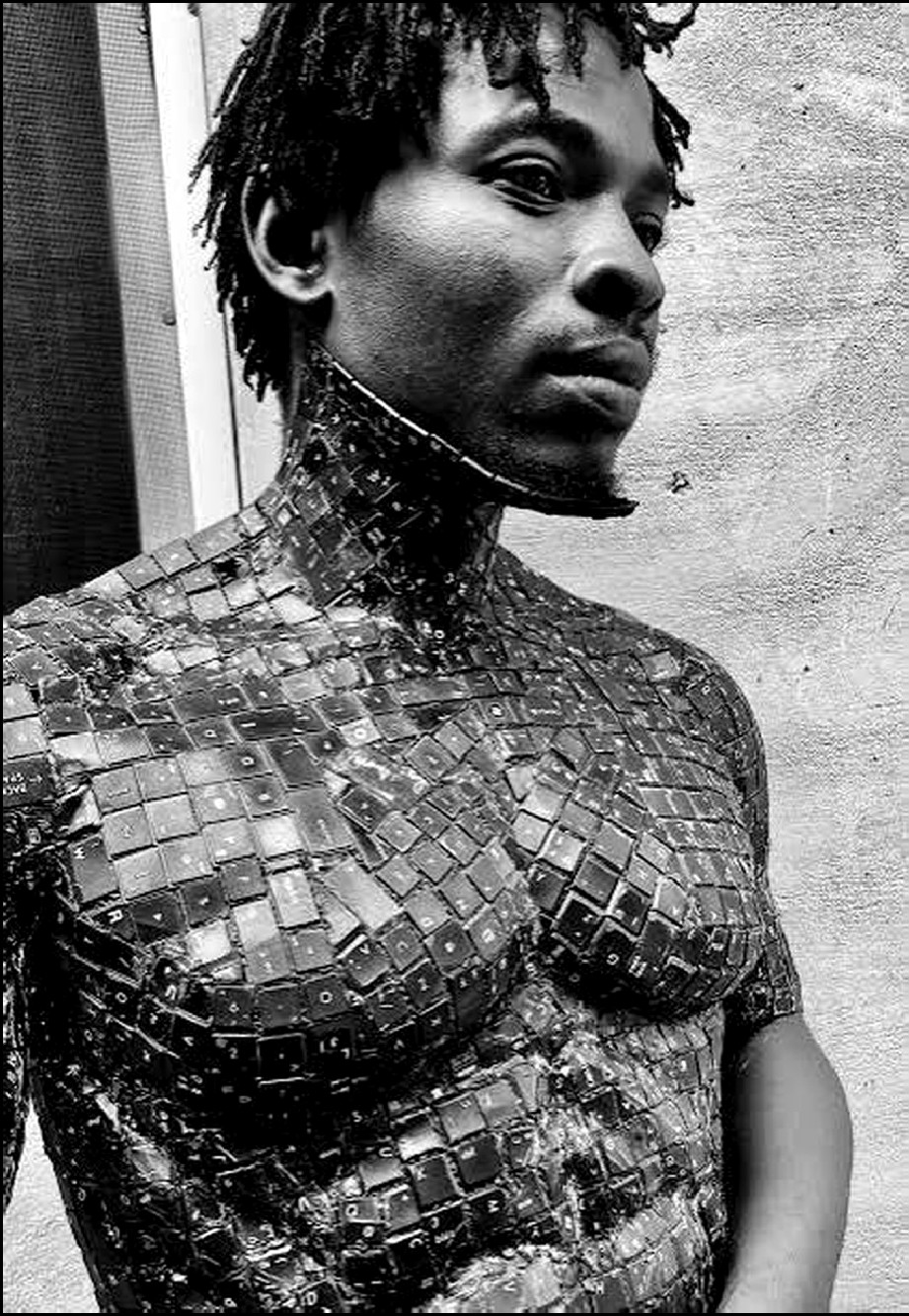
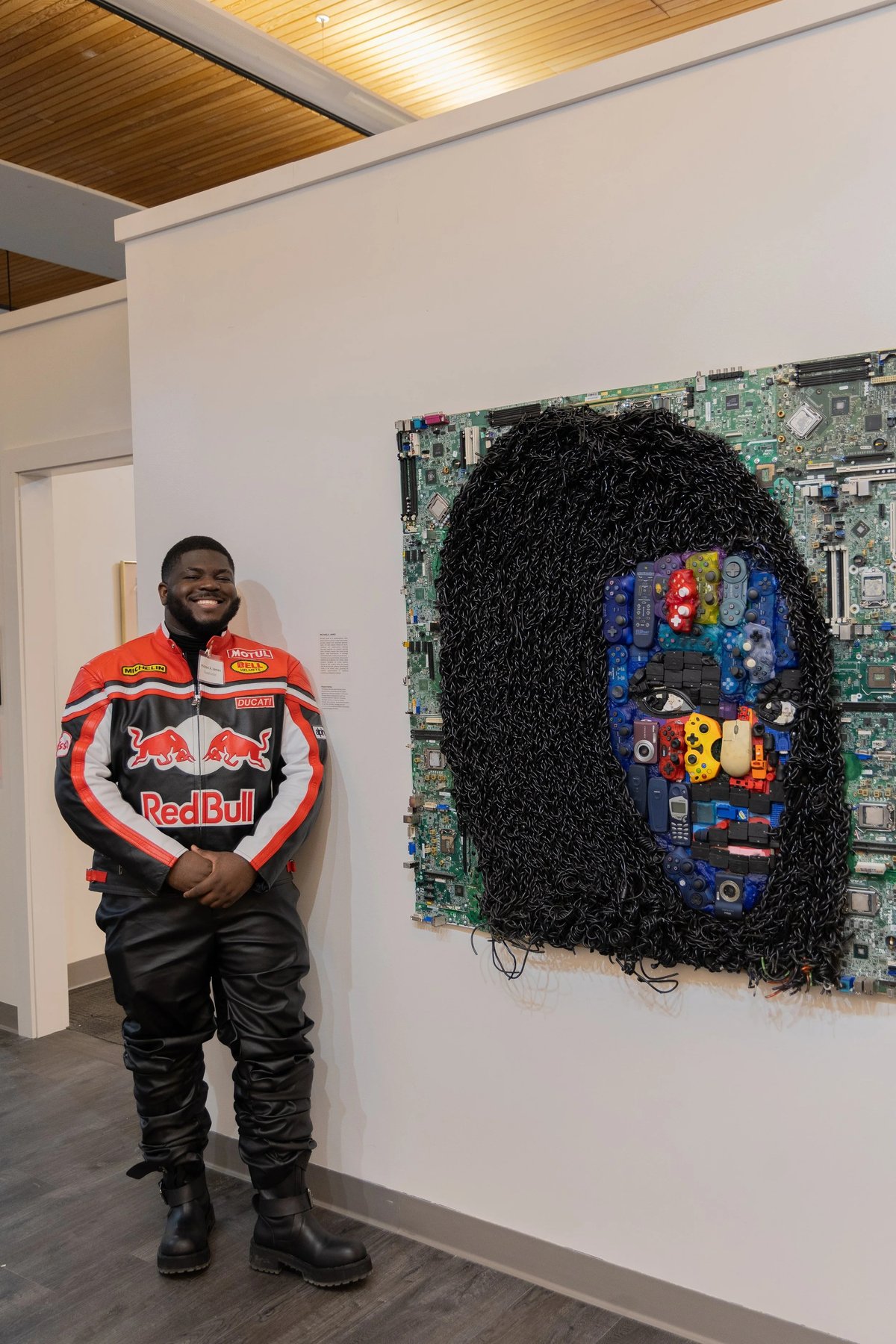
“Each key keeps the fingerprint of a hand that once touched it. The motherboard is a blueprint of life.”
- MFA with distinction, Michaelis School of Fine Art (2015)
- Held in the Deutsche Bank Art Collection (a room carries his name), Smithsonian NMAfA, Pérez Art Museum Miami, Iziko SANG
- Pseudo-cyborg figures: technology as prosthetic identity
- Draws on African fractals and the Luba lukasa memory board
Maurice Mbikayi is an interdisciplinary artist, researcher, and theorist, and the Founder of Orphan Matter: an artistic and intellectual framework that has given rise to the concepts of Orphan Matter and Digital DNA, offering new ways of understanding memory, technology, and the material legacy of contemporary civilization.
Since 2010, Mbikayi has developed an interdisciplinary practice spanning sculpture, installation, performance, photography, moving image, writing, and research. His work explores the cultural, political, social, and material consequences of the Digital Age, investigating how technology transforms identity, labour, memory, power, and humanity's relationship with the planet.
At the heart of his practice is Orphan Matter, a conceptual framework that examines the afterlives of technological civilization. Rather than understanding discarded technologies merely as waste, Mbikayi approaches them as cultural artefacts, archaeological evidence, and living archives of our time. Stripped of their economic function but never of their histories, these orphaned materials retain memory and what he terms Digital DNA: the material traces of extraction, labour, communication, migration, consumption, inequality, data, and ecological transformation embedded within every technological object. Through artistic transformation, these abandoned residues become sites where civilization remembers itself.
Recognized as a pioneer in the artistic use of orphaned electronic residues, Mbikayi has transformed the remnants of the digital world into powerful visual languages that question the values, systems, and myths of contemporary civilization. His work investigates how technological innovation remains inseparable from the infrastructures that sustain it, exposing hidden relationships between extraction, consumerism, colonial legacies, environmental degradation, and the unequal geographies of global capitalism. Rather than treating waste as an endpoint, his practice reimagines it as a beginning: a space where memory, value, and meaning can be recovered.
Underlying his work is a broader philosophical inquiry into the nature of civilization itself. Rather than measuring societies solely by their technological achievements or capacity for innovation, Mbikayi asks whether civilizations should also be understood through what they abandon. His practice proposes that technological residues are not simply evidence of consumption, but repositories of memory and indicators of the ethical, political, ecological, and cultural relationships that define an era. In this sense, his work extends beyond questions of electronic waste to examine how societies construct systems of progress while simultaneously displacing their consequences elsewhere.
Whether through sculpture, performance, photography, moving image, writing, or research, Mbikayi continually investigates how civilizations encode themselves into matter, how memory survives within technological objects, and how art can reactivate forgotten histories embedded within the material culture of the Digital Age. His works function as contemporary memory systems in which orphaned technologies become living archives, preserving and transmitting the Digital DNA of our civilization.
Positioned at the intersection of contemporary art, technology, ecology, philosophy, and critical thought, Mbikayi's practice proposes new ways of understanding humanity's relationship with its own creations. Ultimately, his work is not about electronic waste, but about civilization itself: its memories, its values, its systems of power, and the traces it leaves behind. Through the concepts of Orphan Matter and Digital DNA, he invites us to reconsider not only what we produce, but what we choose to abandon, and what those abandoned materials continue to reveal about who we are.